


What is a pallet wrapper and what is it used for?
The pallet wrapper is a machine that stabilises the load on the pallet using stretch film. The machine supports the securing of goods in production, warehouse, transport and distribution centres, providing repeatable packaging and greater load security.
Pallet wrappers are used in production facilities, warehouses, sorting centres and logistics. The stretch film protects products from dust, moisture, dirt and damage during transport. The machine reduces manual work and maintains identical packaging for a specific type of load.
How does stretch wrapping of pallets work?
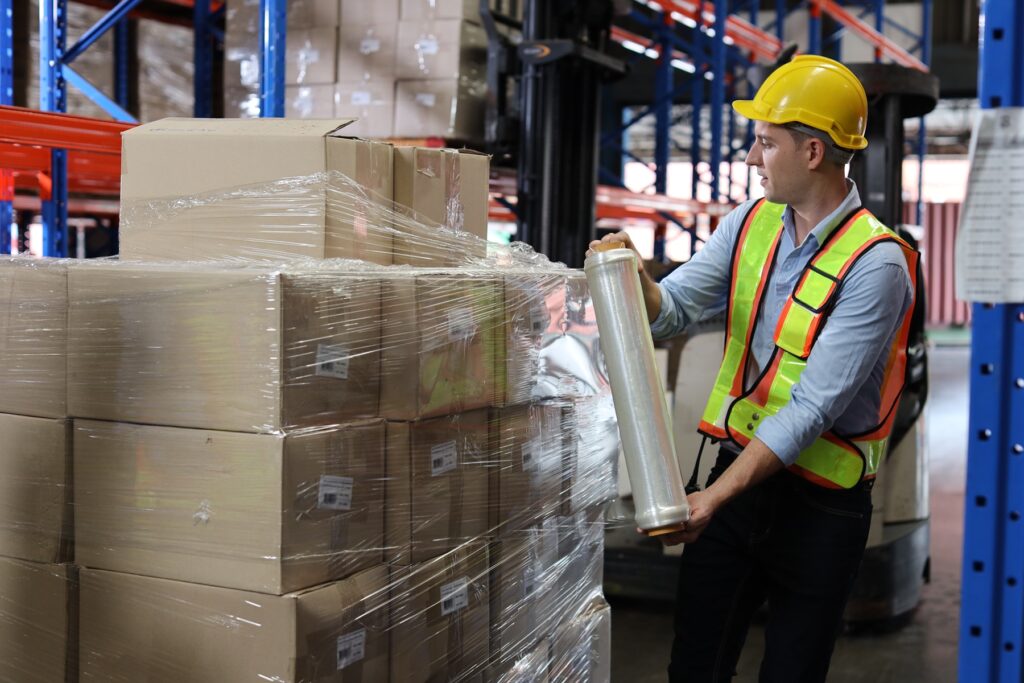
Stretch film wrapping of pallets involves the controlled application of film to the load by the rotation of the pallet, arm or robot. The control determines the tension, the number of wraps, the pre stretch, the working height and the end of the filming cycle.
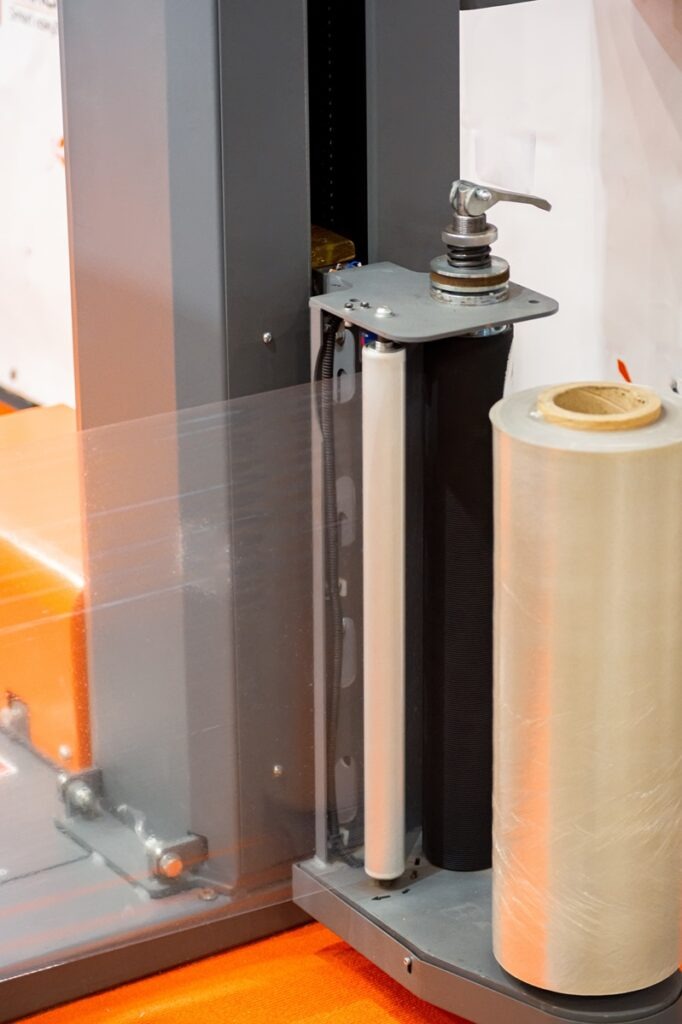
In practice, the operator positions the pallet in the work zone, selects the programme and starts the packaging process. The film is fed from the film trolley and the pre-stretch, which is a pre-stretch of the film, increases the film's performance before contact with the load. Stretching the film up to 200% reduces stretch film consumption and improves packaging stability.
What types of pallet wrappers are there?
Pallet wrapping machines are divided into disc semi-automatic machines, arm semi-automatic machines, in-line automatic machines and mobile wrapping robots. Each solution corresponds to a different workflow, number of pallets, stability of goods and level of packaging automation.
In 2025/2026, the pallet wrappers market comprises a wide range of equipment tailored to different industrial sectors. Automatic wrappers operate in production lines. Semi-automatic models require operator involvement. Self-propelled and mobile wrappers handle varying loads without moving the pallet.
When will a disc wrapper work?
The disc wrapper works well with stable goods, a fixed packing station and a regular flow of pallets. The disc rotates the load and the film carriage guides the film, creating a compact solution for companies looking for flexibility.
The semi-automatic disc wrapper combines affordability with simple operation and good performance. Disc models take up little space, operate from pallet trucks via a ramp and are well suited to companies that do not need full automation. Depending on the model and work organisation, they achieve a capacity of 50-80 pallets per hour.
When is an arm or automatic wrapper better?
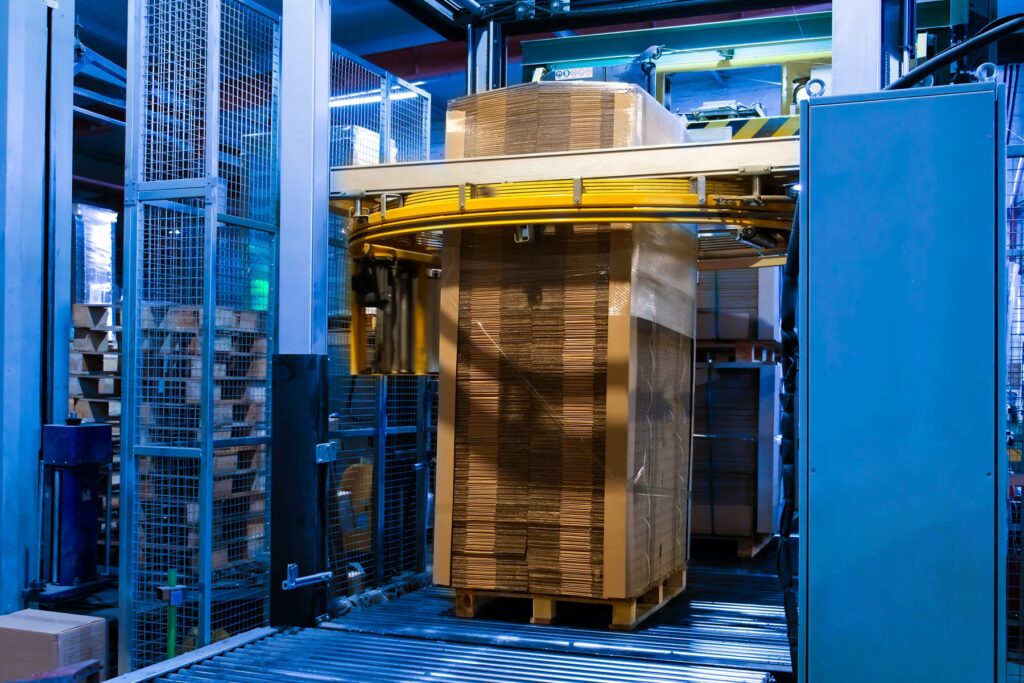
An arm or automatic wrapping machine is better for unstable, heavy or high loads. The load remains stationary while the arm wraps the pallet with stretch film, improving the safety of products prone to shifting.
Arm wrappers are a good choice for heavy products, irregular parcels and products with limited stability. Linear automatic wrappers operate without continuous operator involvement, so they increase productivity when handling a large number of pallets. Pressure pads secure the top of the load and automatic height detection makes it easy to adjust the wrapping method.
What distinguishes a mobile pallet wrapper?
The mobile wrapper is a compact, battery-powered device that moves around the pallet. The solution handles large, heavy, unusual and difficult to move loads without moving them to a fixed position.
The mobile wrapping machine increases ergonomics in warehouses where pallets stand in different areas of the hall. The self-propelled robot encircles the load and applies the film according to the programme. This model reduces the transport of pallets inside the facility and improves the protection of products with irregular dimensions.
Hand wrapping or machine wrapping - which to choose?
Machine wrapping is better than manual wrapping for regular pallet wrapping, more loads and the need for repeatability. The machine speeds up the packing process, reduces staff effort and improves the quality of the protection.
Manual wrapping works well for occasional shipments. Machine wrapping is used where stability, speed and maintaining the same wrapping method are important. Workers do not have to go around the pallet with the roll of film, so they perform other activities with low physical effort.
How does a pallet wrapper reduce film consumption?
The wrapper reduces film consumption through a controlled stretch, pre-stretch and repeatable packing programme. Constant parameters reduce excess film, improve load stability and reduce the cost of securing one pallet.
Pre stretch stretches the film before it is applied to the load. The control regulates the tension force, the number of bottom and top wraps and the speed of operation. This ensures that as much film is used as required for a particular type of load, without accidental rewrapping or excessive wear.
How much does a pallet wrapper cost?
The price of a pallet wrapping machine depends on the type of machine, level of automation, design, control, capacity, presses, pre stretch system and additional equipment. Accurate pricing requires matching the machine to the actual packaging process.
The purchase of a wrapping machine should be analysed by the cost of the whole process, not just the price of the machine. Film consumption, the number of pallets per shift, operator support, design durability, warranty, service and expandability all count. The best pallet wrapper adapts to the company's workflow, not a one-size-fits-all scheme.
What are the dimensions of a pallet wrapper?
The dimensions of the pallet wrapper depend on the diameter of the deck, the height of the mast, the maximum height of the load, the operator work zone, the ramp for pallet trucks and the way the pallets are transported in the hall.
Disc wrappers are compact and fit well in fixed positions. Arm wrappers require space to rotate the arm around the load. Automatic in-line wrappers need space for conveyors, safety zones and integration with other packaging machines.
What to look for before buying a wrapper?
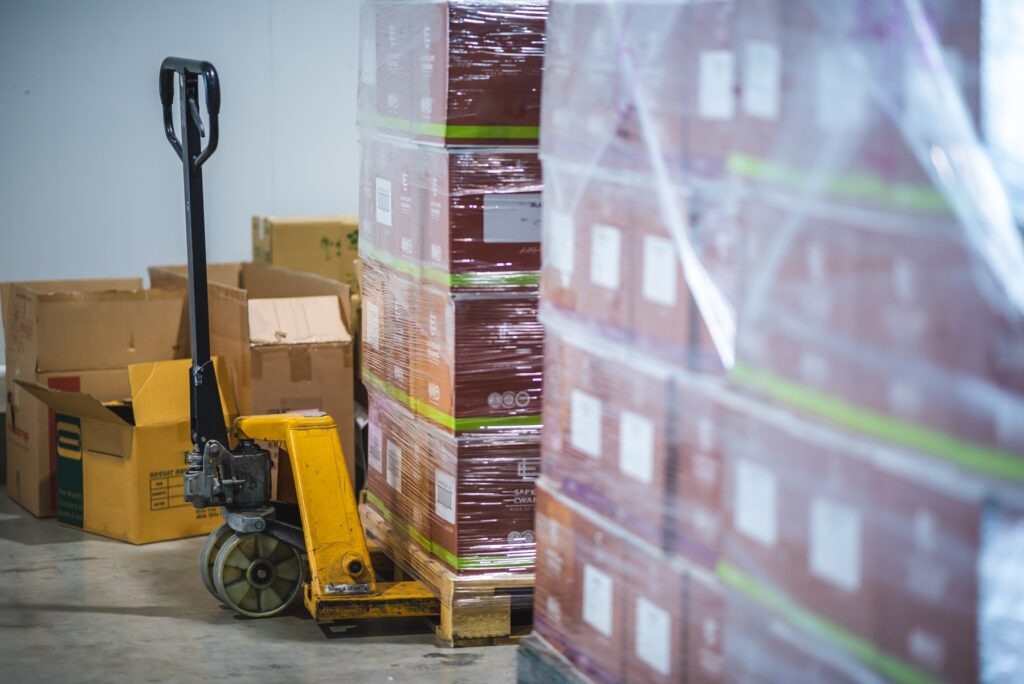
Before purchasing a wrapping machine, it is necessary to determine the type of loads, the number of pallets per day, the stability of the products, the available space, the type of film, the expected level of automation, service, training and the possibility of expanding the station.
A good specification starts with data from the shop floor. Determine the number of pallets per hour. Check the height and weight of loads. Assess the stability of the products. Determine the degree of automation required. Verify transport, assembly, technical support and staff training.
How does the wrapper affect transport and storage safety?
The wrapper improves safety by stabilising the pallet, reducing load shifting and repetitive stretch film protection. It improves safe storage, reduces the risk of damage and facilitates the transportation of products through the supply chain.
Repeatability of wrapping is important with products in cartons, bags, totes and packs. An identical wrapping programme produces a similar result for each pallet. Load stability reduces complaints, losses and downtime associated with correcting poorly secured pallets.
How do you fit a wrapper into your production facility or warehouse?
Matching a wrapper requires an analysis of workflow, load types, shop space, line capacity and expected service levels. Tarpak supports the selection of a solution to suit the customer's process, not just the catalogue parameters.
Tarpak looks at packaging as part of the wider production, palletisation and logistics process. This approach includes machine selection, integration with internal transport, reduced downtime, installation by a qualified worker and staff training. The result is a higher quality, durable and long-lasting solution.
Why does a comprehensive approach to packaging increase company productivity?
The end-to-end approach improves productivity as it combines wrapping, transport, palletising, depalletising, servicing and training into one cohesive process. Tarpak supports customers in automating packaging and optimising film consumption and operator labour.
Professional service includes transport, installation, technical assistance and staff training. The extensive equipment of the machines, the stable construction and the correct controls contribute to the high performance of the entire station. The company gains a solution tailored to the load, rather than a random machine without a process context.
What machines complete the pallet wrapping process?
The pallet wrapping process is complemented by packaging machines, conveyors, palletisers, labellers, cartoners and inspection systems. Their role is to combine the securing of the load with the prior preparation of products for dispatch.
The wrapping machine completes the step of securing the pallet, but does not close the entire packaging process. In FMCG plants, batching, sealing, cartoning and palletising equipment, described in more detail in the material 7 key packaging machines for the FMCG industry - trends 2026. The combination of these elements streamlines the flow of products from line to dispatch.
How does the depalletiser support pallet automation?
A depalletiser is a device that removes products from pallets and transfers them for further processing. It supports automation, as it reduces manual handling and organises the flow of goods before packaging.
In high-volume lines depalletiser works in conjunction with internal transport, packaging machines and wrapping stations. This combination reduces manual operations, improves ergonomics and allows better control of the pace of pallet work.
How does the packaging of goods link to packaging and logistics?
Goods packaging means preparing products for sale, picking or shipping. The process combines labelling, wrapping, grouping, inspection and logistics, and therefore affects the subsequent filming and securing of pallets.
A well-described picking process makes it easier to select a wrapper, as it shows the type of products, the packing method and the structure of the loads. The wider context is explained in the article what is packaging, which combines product preparation with storage and distribution.
How do you choose a pallet wrapper for your business?
A pallet wrapper is chosen based on the real process, number of pallets, type of load, shop space, expected automation, film consumption, safety requirements and availability of service and training.
The practical selection checklist includes 6 steps:
- Specify the number of pallets per hour and shift.
- Check the weight, height and stability of loads.
- Choose the type: disc, arm, automatic or mobile.
- Compare pre stretch, control, presses and auto detection.
- Verify hall space and pallet truck operation.
- Include installation, training, warranty and technical support.
The best choice comes from the process, not the price alone. Wrapping machines increase repeatability, reduce film consumption, improve safety and speed up packaging. A well-chosen machine supports the stable transport of loads and the development of automation in the company.

 English (UK)
  Polski
  Deutsch