


Key findings
Analysing packaging machinery for the FMCG industry, the 2026 trends clearly indicate that a competitive advantage will only be provided by the full integration of production systems with master software. According to our industry analysis, plants delaying upgrades lose an average of 18% in margin due to unplanned downtime. The summary below answers the key question: which packaging machines will be key in 2026?
- 7 key technologies: From ultra-fast flow-pack machines to robotic end-of-line palletisers.
- Increase in OEE: Automation of the packaging lines increases the overall efficiency of the equipment by 15-25%.
- Local service: Choosing a manufacturer with a 24-hour response time (like TARPAK) eliminates the risk of costly downtime, outclassing cheaper imported machines.
- Sustainability: Adapting to monomaterials and biodegradable films is becoming a legal requirement and not just an image trend.
Introduction: A new era of efficiency in the food industry
Packaging machines for the FMCG industry (Trends 2026) focus on reducing operating costs through full automation, which guarantees 99% process repeatability. According to data from industry reports, as many as 65% Polish food manufacturers are facing rising labour costs and staff turnover on production lines. This guide looks in detail at packaging technologies that eliminate bottlenecks and directly impact plant profitability.
The demands of the FMCG market in Poland are unforgiving: the pressure on environmentally friendly packaging materials is increasing and hygiene standards are becoming more stringent. The right packaging machine is no longer just a tool for wrapping a product in film - it is an advanced data hub integrated with an ERP system that reports on raw material consumption and rejects in real time. The implementation of modern solutions allows sterility to be maintained, waste to be minimised (zero waste approach) and the unit cost of packaging to be drastically reduced.
Declaration of transparency
This article is based on the practical implementation data of TARPAK engineers from 2020-2025 and the current requirements of the Machinery Directive 2006/42/EC. Our aim is to provide operations directors with the objective technical knowledge necessary for optimal equipment selection.
All performance parameters, failure rates and return on investment (ROI) estimates are based on actual realisations in Polish production facilities. We do not rely on theoretical marketing declarations, but on hard data from the factory floors, where machines operate in a three-shift system, in demanding environments with high humidity or dust.
Why is packaging line automation key for the FMCG sector?
Packaging line automation in the food industry increases operational efficiency (OEE) by 15-25% by eliminating micro-stalls and human error. According to McKinsey Poland's 2024 report, the potential for robotisation in domestic food processing is still nearly 40% untapped, which is a huge space for building competitive advantage. The question of why packaging automation is essential in FMCG today comes down to maths and safety.
In engineering practice, we see that automation brings three fundamental benefits. Firstly, it drastically reduces raw material waste. Precision dispensers and vision systems that reject defective packaging implement a zero waste policy. Secondly, it guarantees absolute reproducibility and hermetic sealing, which is critical for shelf-life extension. Thirdly, it eliminates direct human contact with the product, allowing the highest sterility standards to be maintained - an absolute requirement in an era of tighter IFS and BRC audits.
For plants struggling with a shortage of operators, implementing automated systems is the only way to maintain production volumes. The full integration of machinery is not just about the mechanics, but more importantly about the flow of information. For more on how a holistic approach affects plant profitability, read the article: Manufacturing automation - key benefits for industry. A suitably configured line itself informs maintenance services of the imminent need to replace a consumable.
7 key packaging machines for the FMCG sector for 2026
In 2026, the key packaging machines for the FMCG industry are highly integrated systems that can rapidly changeover to different packaging formats. Based on an analysis of more than 150 enquiries from the last quarter, we have identified seven technologies that will dominate the investment budgets of technical directors. We discuss the best end-of-line and primary packaging machine solutions below.
Flow Pack machines (Horizontal flow packing machines)
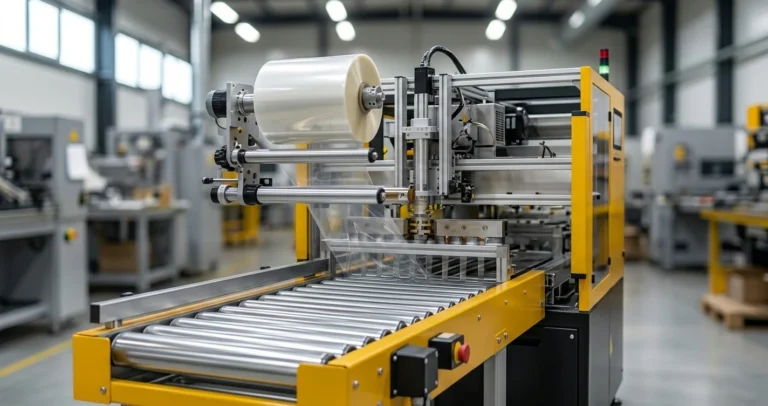
Flow-pack machines are the absolute foundation of high-speed primary packaging, reaching capacities of several hundred units per minute. The use of new generation servo drives allows for smooth film guidance and precise cutting, which minimises the number of empty packs. They are indispensable in the bakery, confectionery and fresh vegetable packaging industries. Their greatest advantage is their flexibility - it takes an experienced operator just a few minutes to change the format (e.g. from a candy bar to a larger biscuit). More technical details can be found in the specification: Flow Packs.
Automatic [Case packers, case packing, case packer price ...
- TARPAK](https://tarpak.pl/oferta/kartoniarki/)
Secondary packaging in unit or bulk cartons is the process where bottlenecks most often arise. Modern [Case packers, case packing, case packer price ...
- TARPAK](https://tarpak.pl/oferta/kartoniarki/) automatically take a flat blank, shape it, insert the product (e.g. a tube of toothpaste with a leaflet) and then close it with Hot-Melt glue or mechanical locks. The pharmaceutical and cosmetics industry bases its entire logistics on them. Find out more about the parameters of these machines on the website: Cartoners - TARPAK offer.
Bottling lines for liquids and dense masses
Integrated filling lines are responsible for precise dosing of liquid (water, juices) and semi-liquid products (mayonnaise, creams) into bottles or jars. In 2026, mass flow meters are becoming the standard, which guarantee dosing accuracy of 0.1%, eliminating the phenomenon of so-called product „overweighting”. In addition, modern CIP (Clean-In-Place) systems allow the plant to be cleaned without disassembly. Complete solutions in this area are presented at: tarpak.pl/spill lines.
Industrial labellers
Product traceability is a legal requirement that advanced labelling systems fulfil. Industrial labellers apply self-adhesive labels to packaging of any shape (cylindrical, flat, oval) at a speed synchronised with the rest of the line. Equipped with vision systems, they immediately verify the presence and legibility of 2D codes and expiry dates. See how they work in practice: Industrial labellers - automatic product labelling.
Case packers
Modern bulk packaging systems for FMCG (wrap-around or top-load) group unitised products and place them in transport cartons. In 2026, their ability to work with 100% recycled cardboard, which often has lower rigidity, will be crucial. These machines must be equipped with adaptive grippers that will not damage fragile primary packaging during grouping.
Robotic palletising systems
Does robotisation of the packaging process increase productivity in FMCG? Definitely yes, especially at the very end of the line (end-of-line). Six-axis or gantry (gantry) robots place finished cartons on pallets according to pre-programmed patterns, ensuring perfect load stability. They eliminate the need for workers to manually carry tonnes of goods each shift, reducing sickness absences and back injuries due to overloading.
Sealing machines and Traysealers
For the meat and ready meals industry, tray sealers (tray sealers) with MAP (modified atmosphere packaging) are absolutely critical. They pump the oxygen out of the package and inject an inert gas mixture, which naturally prolongs the freshness of the food without the use of preservatives. The modern models for 2026 are suitable for sealing trays made of monomaterials (e.g. in the 100% from PET), making them easy to recycle later.
How to select an efficient packaging machine and integrate it with an ERP system?
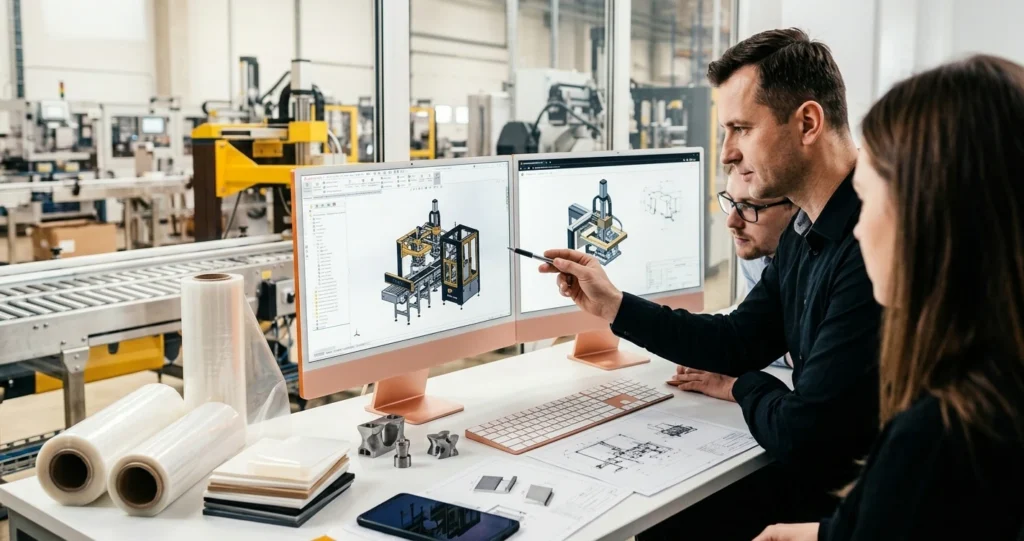
An efficient packaging machine is selected by analysing bottlenecks, rigorously calculating the required cycles per minute and verifying communication protocols with the plant's IT systems. Our experience shows that oversizing a machine is as costly a mistake as undersizing it. When answering the question of how to select an efficient packaging machine for the FMCG sector, there are 4 key steps to follow.
Firstly: Audit the current capacity. The actual throughput of the equipment upstream of the packaging machine (e.g. oven or pouring machine) should be measured. The packaging machine should have a capacity reserve of 15-20% in order to be able to „unload” production buffers on an ongoing basis in case of temporary micro-downtimes.
Second: Material tests. Each film behaves differently when exposed to the temperature of the sealing machines. It is essential to test the target packaging material on the manufacturer's machine before signing the contract.
Third: IT integration. In 2026, a machine „cut off” from the network is an obsolete machine. At TARPAK, it is standard practice to equip PLCs (e.g. Siemens, Allen-Bradley) with OPC UA or MQTT communication modules. This allows the direct transmission of production data (number of good pieces, rejects, working time, alarms) to ERP (Enterprise Resource Planning) and MES (Manufacturing Execution System) systems. This gives the operations director a live view of OEE indicators from his smartphone.
Fourth: Hygiene and safety. The design of the machine must comply with the hygiene standards for the industry (e.g. design in protection class IP65/IP69K, acid-resistant steel AISI 304/316L). The absence of nooks and crannies in which product residues could accumulate significantly reduces the cleaning time of the machine between shifts.
Sustainable technologies and budgeting for modern packaging lines
Sustainable packaging technologies in FMCG 2026 are based on monomaterials and biodegradable films, which reduces the carbon footprint and meets strict EU guidelines. According to guidelines published on Gov.co.uk, among others, food manufacturers must prepare for a deposit system and extended producer responsibility (ROP). This forces retooling of machines for materials that are more difficult to heat treat.
How much does a modern packaging line cost for an FMCG manufacturer? The cost of implementation depends on the level of complexity, but for high-performance automated lines the range is usually between PLN 400,000 and even PLN 2,500,000 for complex end-of-line systems. However, it is worth looking at this through the lens of return on investment (ROI).
According to data compiled by researchers at the Gdansk University of Technology on the energy intensity of industrial processes, replacing old pneumatic drive systems with modern servo motors saves up to 40% of electricity. Adding to this a reduction in film waste of 15% and savings in labour costs (replacing 3 operators with one supervisor), the average payback time on a TARPAK machine is now between 14 and 22 months. When budgeting for the line, add about 5-8% of the machine's value per year for spare parts packages and preventive maintenance.
Engineering practice: What won't AI tell you about implementing packaging lines?
Successful implementation of a packaging line requires consideration of the physical limitations of the shop floor, stringent health and safety standards and in-situ material testing, which algorithms will not predict. In theory, every machine in the catalogue achieves maximum output. In engineering practice, on the shop floor, we are confronted with a brutal reality: uneven floors, voltage drops in the plant network or varying humidity affecting film slippage.
The biggest mistake we have seen during years of deployments is investing in cheap foreign machines (often from Asia) without local technical support provided. Customers tempted by a 30% lower price were losing hundreds of thousands of zlotys when a specific controller failed during peak season and the waiting time for a part from overseas was 4 weeks. In the FMCG industry, where product expiry dates are short, 4 weeks of downtime means losing contracts with retail chains. Therefore, at TARPAK we guarantee a 24-hour service response time in Poland and the availability of standard parts from our warehouse.
Another challenge is the „rigidity” of off-the-shelf solutions. Foreign manufacturers of series machines rarely agree to deep structural modifications. Meanwhile, Polish plants often struggle with a lack of space (so-called hall layout). The modularity of TARPAK machines makes it possible to design an infeed conveyor at a 90-degree angle or to integrate a metal detector and a checkweigher in a minimum of space.
When developing machines, it is imperative that we comply with Polish labour law and safety standards (available in the ISAP database), as well as the strict Machinery Directive 2006/42/EC. This requires the implementation of advanced optical curtains, safety switches (e-stops) and exclusion zones. AI can generate a beautiful line diagram, but it is up to the engineer on site to assess whether the operator will have ergonomic access to change a 30kg roll of film without endangering the spine. We always insist on testing the customer's packaging material on our test line before finalising a project - a film that works at one biscuit manufacturer may tear at another due to a marginally different seal thickness.
Frequently asked questions (FAQ) about packaging machines for FMCG
The following summary answers key questions from operations directors about trends, costs and equipment selection for 2026. We have collected the most common concerns raised during technology audits at our clients' sites.
What will be the trends in food packaging in 2026?
Trends for 2026 will be dominated by easily recyclable monomaterials and smart packaging (smart packaging) with QR codes that track the product from field to table (traceability). Packaging machines will need to handle thinner, greener films without sacrificing sealing speed, forcing the use of next-generation precision servo drives and temperature controllers.
What are the advantages of automatic flow-pack machines?
The main advantages are the enormous format flexibility, the high speed (up to 600 packs per minute in rotary systems) and the airtight seal to prolong product freshness. Flow Packs - TARPAK are also relatively compact and easy to integrate into automatic feeding systems (e.g. from tunnel ovens), minimising the need for operator intervention.
How to choose the right cartoner for the production profile of a small plant?
In a small plant, versatility and short changeover times are key, rather than maximum machine speed. Choose a cartoner with a modular design, which allows the carton format to be changed easily in under 15 minutes using digital indicators, without the need for specialised tools or calling in a mechanic.
How much does it cost to service and maintain an industrial packaging line?
Annual maintenance costs (service, fast-wearing parts such as knives, belts, heaters) typically range from 4% to 8% of the initial machine value. By investing in preventive maintenance packages and predictive systems (which monitor drive vibration), these costs can be reduced by around 25% by eliminating major breakdowns and unplanned downtime.
Which labelling systems work best in the food industry?
Automatic wipe-on or tamp-blow self-adhesive labellers made of acid-resistant steel (IP65) are best suited to the food industry. They must be integrated with thermal transfer printers (TTO) for real-time printing of variable data (expiry date, batch number) directly onto the edge of the applicator.
Is packaging automation paying off for SME companies?
Yes, automation in SMEs pays for itself in 18-24 months on average. Even when producing 20-30,000 pieces per day, replacing manual labour with a semi-automatic or compact flow-pack machine allows employees to be reallocated to higher value-added tasks, while drastically reducing the cost of rejects due to human error.
Constraints and Alternatives in Packaging System Implementations
Full end-of-line automation is not viable for artisanal production batches of less than 1,000 pieces per shift, where the frequency of changeovers exceeds the time of production itself. While many experts recommend immediate full robotisation of the plant, there is a strong argument for a modular approach, especially for companies with a highly variable product range.
For manufacurers and smaller FMCG plants, investing in a powerful palletising robot can „freeze” capital. In such situations, alternatives are ideal: semi-automatic systems (e.g. operator-assisted rotary table wrappers) or compact machines. Expanding the packaging line in a step-by-step model allows for a smooth scaling of the financial outlay. It is possible to start by automating the batching and sealing process itself, and leave the bulk cartoning for another financial year. The key is to choose a machine supplier whose controllers will allow you to „add on” further automation modules in the future without having to replace the entire control system.
Summary and expert support from TARPAK
Investment in modern packaging machinery determines the competitive position of FMCG plants in the face of rising labour costs and environmental pressures in 2026. Full automation, from ultra-fast flow-pack systems to robotic palletisers, guarantees production stability, increases OEE and ensures compliance with strict hygiene standards. The key to success, however, is not the purchase of the equipment itself, but its perfect integration and access to reliable local service. Are you ready to eliminate bottlenecks in your plant? Configure your machine and see how TARPAK engineers can optimise your packaging process.
Note on the author and TARPAK expertise
Wladyslaw Tarachowicz, an engineer and automation expert who has been designing and implementing advanced systems for industry for many years. At TARPAK, we have our own design office, which allows us to create machines „tailor-made” to the specific needs of customers in the food, cosmetics and pharmaceutical sectors. Our equipment undergoes rigorous testing and has full CE certification.
What sets TARPAK apart from global corporations is our unique value proposition: modular personalisation combined with a guaranteed 24-hour local service response time. We understand that in the FMCG industry, every hour of bottling or packaging line downtime generates huge financial losses. That is why our design is based on reliable components available „off-the-shelf” on the Polish market, which ensures the production continuity of our business partners.
 English (UK)
  Polski
  Deutsch