

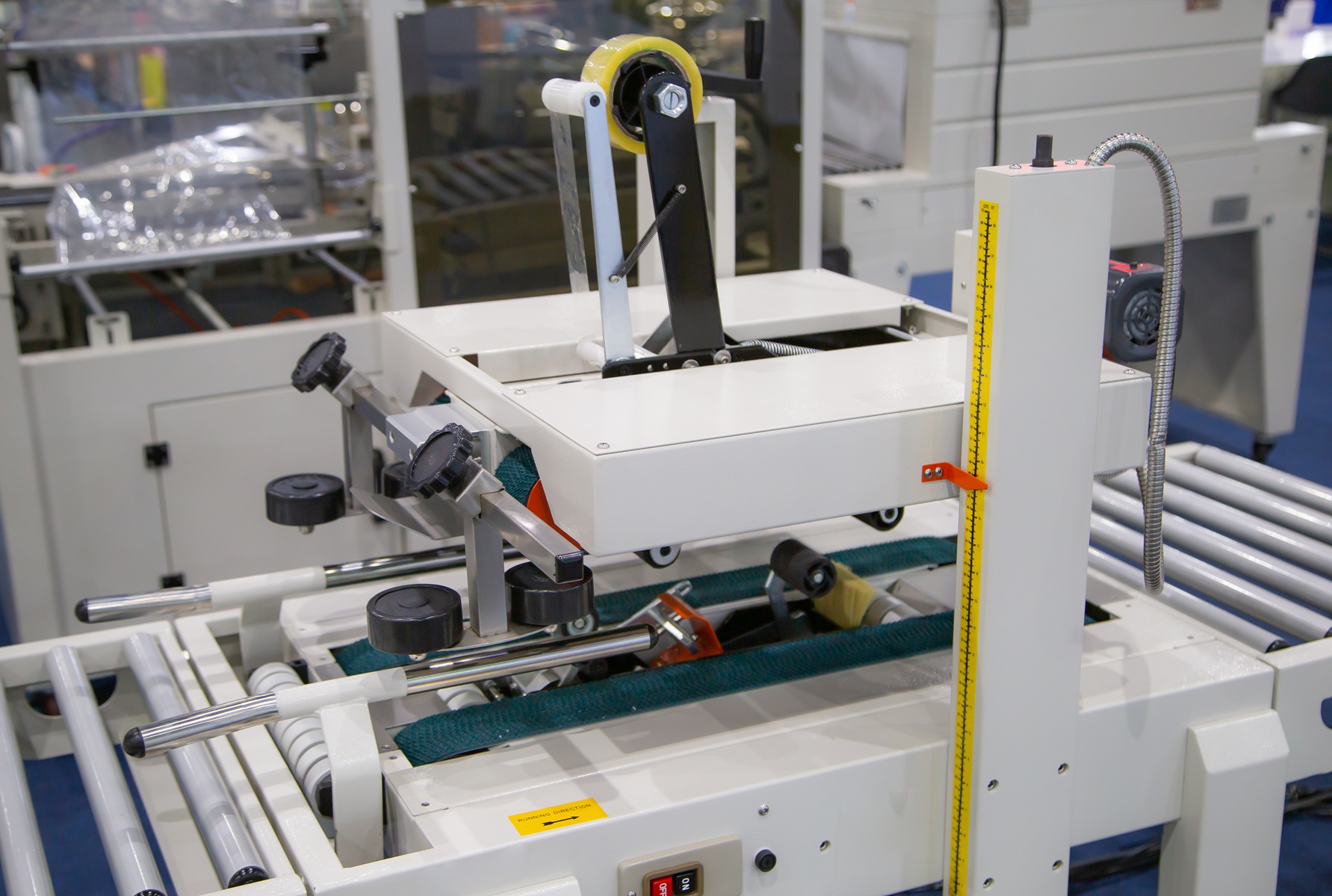
What is a carton sealer and how does it work?
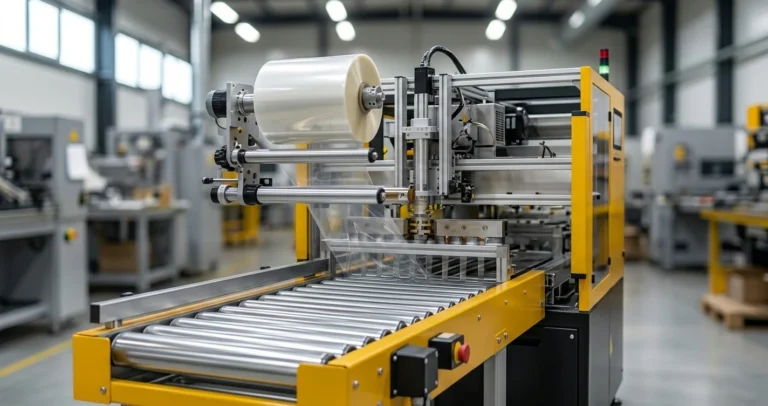
A carton sealer is a packaging machine that seals cartons using adhesive tape applied by a head to the top and bottom flaps of the carton. The machine guides the carton through the sealing heads, ensuring a secure and consistent seal ready for dispatch.
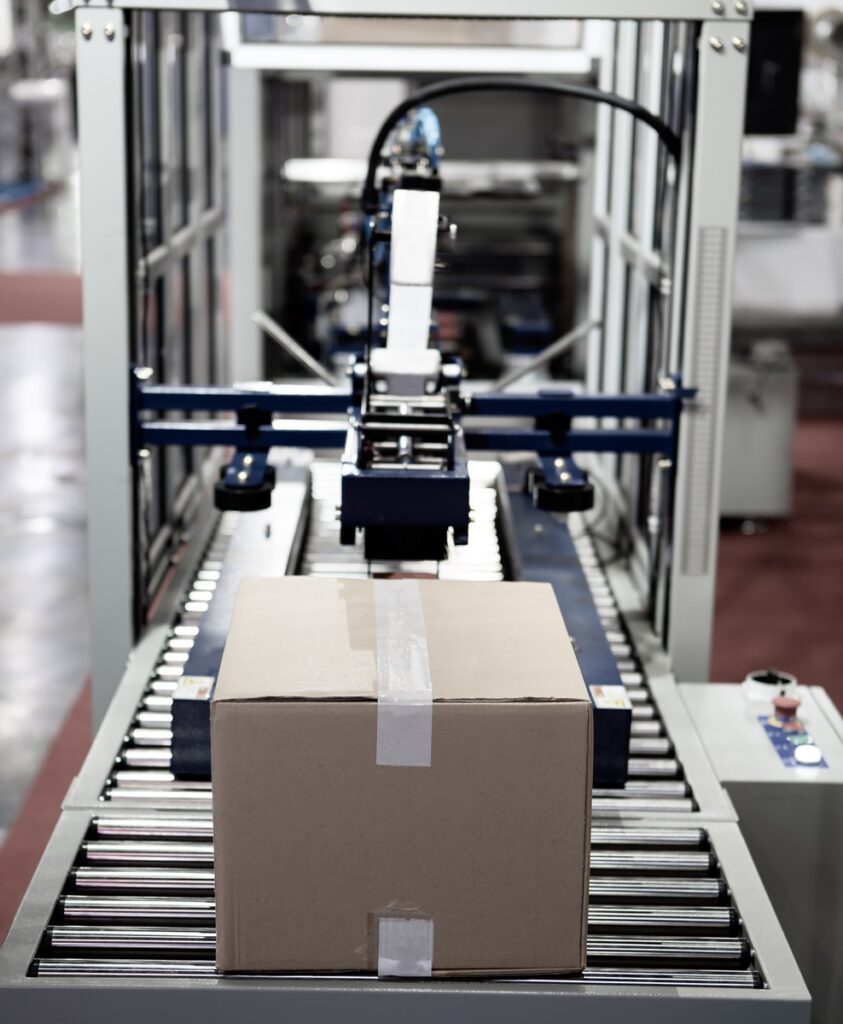
The carton sealer guides the carton through a head fitted with a tape roller, which presses the adhesive layer onto the carton flaps with a constant pressure. The top flaps are sealed in a continuous process – the carton enters the machine, the tape is applied, and the carton leaves the sealer ready for transport.
How does a folder-gluer differ from a standard carton sealer?
The folder-gluer combines two functions: it forms cartons from flat cardboard blanks and seals them with adhesive tape in a single cycle. A standard carton sealer merely seals packaging that has already been formed. The folder-sealer replaces two machines and reduces packing time.
A standard carton sealer accepts packaging that has been prepared in advance by an operator or another machine. The folding and sealing machine picks up a flat cardboard blank, folds the bottom flaps, allows the carton to be filled, and then seals the top flaps with tape.
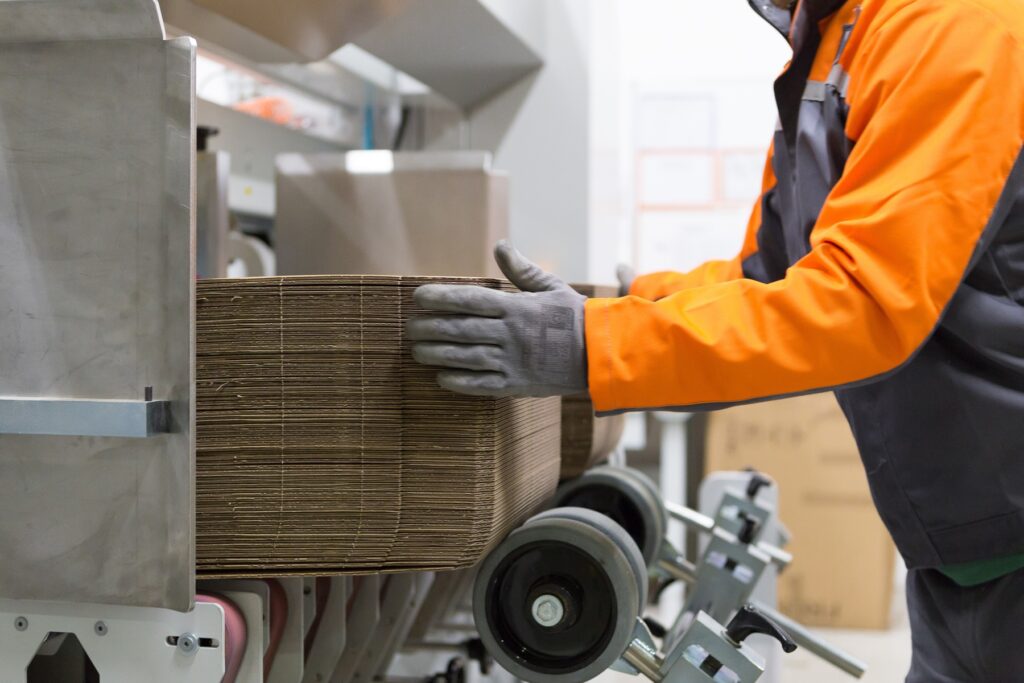
In the full-cycle version, the entire process – from the die-cut sheet to the hermetically sealed packaging – takes place without any human intervention on the production line.
What types of carton sealers are available on the market?
There are three types of carton sealers available on the market: manual, semi-automatic and automatic. Manual sealers are operated by an operator. Semi-automatic sealers require the packages to be fed in manually. Automatic sealers carry out the entire sealing cycle without human intervention.
Manual sealing machines They are ideal for small and medium-sized businesses with low production rates and a varied range of cardboard boxes in different sizes.
Semi-automatic sealing machines They require the cartons to be fed into the machine manually, after which they automatically apply adhesive tape to the top and bottom flaps. They are suitable for volumes of 200–600 units per hour.
Fully automatic sealing machines They automatically adjust to the dimensions of the cardboard box and apply adhesive tape with a level of precision that cannot be achieved by hand. This solution is designed for large production lines and warehouses, where the machine’s operating speed must match the high pace of the entire line.
What is the output of carton sealers?
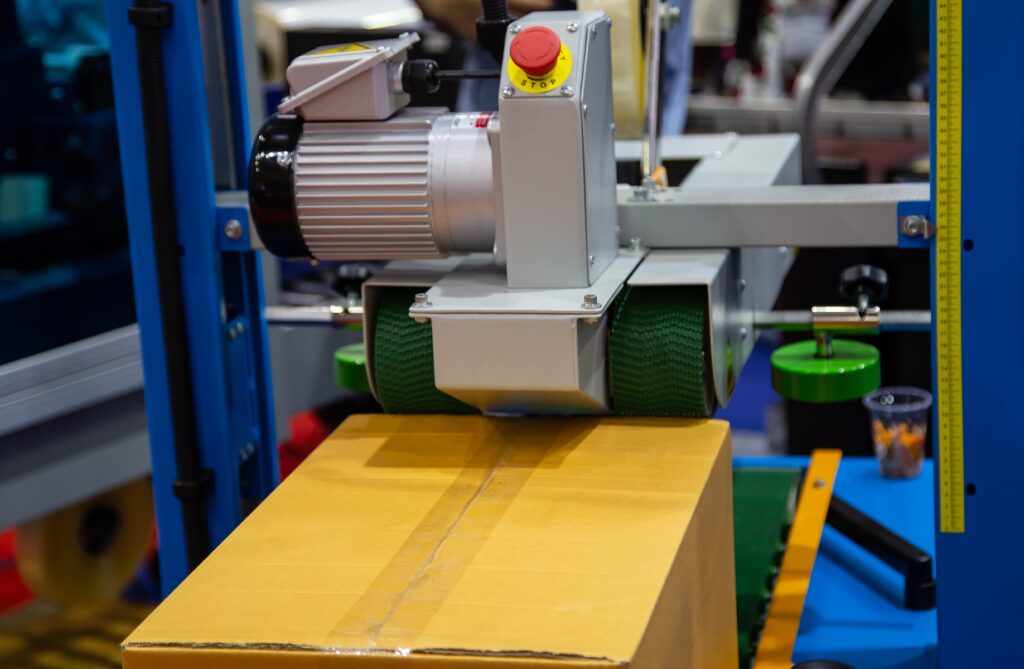
Automatic sealing machines achieve a throughput of up to 1,300 cartons per hour. Manual sealing machines – up to 1,000 units per hour. Semi-automatic models have a capacity of between 300 and 600 units, depending on the operator’s skill and the dimensions of the cartons.
Automatic sealing machines significantly increase productivity compared to manual sealing. The machine’s operating speed remains constant – it does not slow down at the end of a shift or when staff rotate.
The repeatability of the process eliminates human error and guarantees consistent sealing quality with every carton-sealing cycle.
What types of adhesive tape are used in carton sealing machines?
Three types of tape are used in carton sealing machines: PP (polypropylene), PVC (polyvinyl chloride) and paper tape. PP tape is the most commonly used – it is cost-effective and available in various widths. PVC tapes offer greater adhesion at low temperatures.
A well-chosen adhesive tape for a carton sealer increases the durability of the carton seal and reduces operating costs. The tapes must be compatible with the sealing head – using adhesive tape of the wrong size causes the tape to break and leads to line downtime. Paper tapes are environmentally friendly and strong – they are ideal wherever packaging must meet recycling standards and transport requirements.
Which industries are carton sealers designed for?
E-commerce companies generate particularly high demand for carton sealers for boxes of various sizes – from small parcels to large bulk boxes. Warehouses operating 24/7 require machines with plenty of spare capacity. A carton sealer is an integral part of the end-of-line process – we discuss the complete set of equipment in more detail in the article 7 key packaging machines for the FMCG sector.
How do you choose a carton sealer to suit your production scale?
Selecting a carton sealer requires an analysis of four parameters: daily packaging volume, the range of carton dimensions, the required level of automation, and the space available on the production floor. The carton sealer should have a capacity reserve of 15–20% above the current demand of the production line.
For volumes of up to 500 cartons per shift, a semi-automatic model is sufficient. From 1,000 units per shift, fully automatic carton sealers deliver real savings. The choice of carton sealer depends on the scale of the business and the specific nature of the packaging. You can find our full range of equipment – including carton folders and sealers tailored to various industries – in the category cardboard box folding and sealing machines.
How much does a carton sealer cost, and is it a worthwhile investment?
Semi-automatic carton sealers cost from a few thousand zlotys. Models with a fully automated process cost from a dozen or so to several tens of thousands of zlotys. The investment pays for itself through reduced labour costs, the elimination of human error and faster carton sealing – the payback period is usually 12–24 months.
The actual savings from using a carton sealer include: replacing the work of 1–2 operators, reducing losses due to incorrect sealing, and increasing the efficiency of the entire production line. A well-chosen carton sealer reduces operating costs and improves workplace ergonomics. A properly maintained carton sealer will operate trouble-free for many years.
How does a labelling machine eliminate human error in the packaging process?
A carton sealer eliminates human error by using fixed, pre-programmed sealing parameters – the same pressure, speed and position of the adhesive tape every time. A worker who is tired at the end of a shift is prone to making mistakes. The machine maintains full repeatability throughout every working hour.
Human error during the carton sealing process leads to packages opening during transit and customer complaints. Continuous-feed sealing machines eliminate this problem – every carton leaves the machine with the adhesive tape applied identically. Automating the packing process relieves operators of the monotonous task of sealing cartons and improves the efficiency of the whole team.
How can a labelling machine be integrated into a production line?
The carton sealer integrates with the production line via standard connectors for the inlet and outlet conveyor belts. The machine receives cartons from the previous stage and transfers them to the palletising or wrapping section. A key parameter is ensuring that the sealer’s speed matches the throughput of the entire line.
Sealing machines fitted with PLC controllers communicate with ERP systems, transmitting data on the number of cartons sealed and any alarms. The machine adjusts its operating speed to match the production line’s throughput. We discuss how to keep packaging machines in good working order in more detail in the article maintenance and servicing of packaging machinery.
What technical specifications should you check before buying a labelling machine?
Before buying a carton sealer, check: the range of carton dimensions (min./max. length, width and height), output in units per hour, compatibility with PP and PVC tapes, changeover time between formats, and the availability of after-sales service in Poland.
Selecting the technical specifications for a sealing machine requires an analysis of the entire packaging process. A manufacturer with a spare parts warehouse in Poland will reduce any downtime from weeks to hours. High-quality equipment backed by local support ensures the reliability of the production line.
How can I contact a TARPAK adviser regarding the selection of a sealing machine?
Our range includes carton sealers and folder-gluers suited to various production volumes and industries. Our machines operate on a three-shift basis in demanding environments – in warehouses, distribution centres and on production lines in the e-commerce and FMCG sectors.
Please contact our advisers to discuss selecting a carton sealer tailored to your needs. We’ll help you choose the right model – either automatic or semi-automatic – that’s compatible with the dimensions of your cartons and the equipment already in use on your production line. Sealing cartons on a large scale requires the right machine – we’ll help you choose it.
 English (UK)
  Polski
  Deutsch