


SCADA system, i.e. Supervisory Control and Data Acquisitionis the backbone of modern industrial automation. Its primary task is the supervision of technical processes, data acquisition in real time and to help operators make decisions that directly affect the productivity, safety and profitability of production facilities. In the reality of global competition and rising energy prices, every second of unplanned downtime means lost revenue. SCADA - combining control and data acquisition with intelligent analytics - it captures micro-stops in real time, optimises media dosage and signals irregularities before they translate into the final product. This is precisely the advantage up-to-date data over historical data makes it the tool of first choice for companies planning digital transformation.
Evolution from signalling panels to digital twins
The first SCADA systems appeared in the 1960s, when elaborate signalling panels began to be displaced by miniframe computers. The development of communication networks, programmable logic controllers PLC and HMI software has accelerated the integration of control systems into company databases. In the food industry, this is clearly evident in lines using packaging machineswhere rapid diagnostics and the exchange of packaging formats require access to data with virtually no delay. Entering the era of digital twins and edge computing has further reduced the decision loop from minutes to seconds.

What does a typical SCADA system consist of?
The simplest way to put the architecture is in four layers:
- Measurement equipment layer - temperature sensors, flowmeters and encoders collect data on critical parameters technological processes.
- Acquisition and control layer - programmable logic controllers and RTUs implement the control logic and transmit the data to the servers.
- Communication layer - reliable communication networks (Ethernet/IP, Profinet, Modbus TCP, MQTT) provide a data flow z various sources to the head office.
- Surveillance layer - server, SCADA software and HMI visualise the process, trigger analytics and data archiving.
An integral part of the system is a database for storing raw samples and KPI aggregates. Increasingly, real-time engines optimised for data acquisition high frequency. An important role is played here by the human-machine interface (HMI - human machine interface) - well designed user interface reduces the burden on operators in daily work and reduces the risk of errors.
Production automation in practice: integration with filling machines
Today's beverage bottling lines are an environment where SCADA, bottling machinery i production automation intermingle in a single digital ecosystem. The system monitors the dosing of liquids, synchronises the speed of the conveyors with the cappers and automatically switches recipes based on ERP orders. Continuous viewing of CIP temperature, manifold pressure and valve status enables the detection of potential problems before the product reaches the customer, and alarm functions guide the operator through corrective procedures.
Cardboard machine and return on investment case study

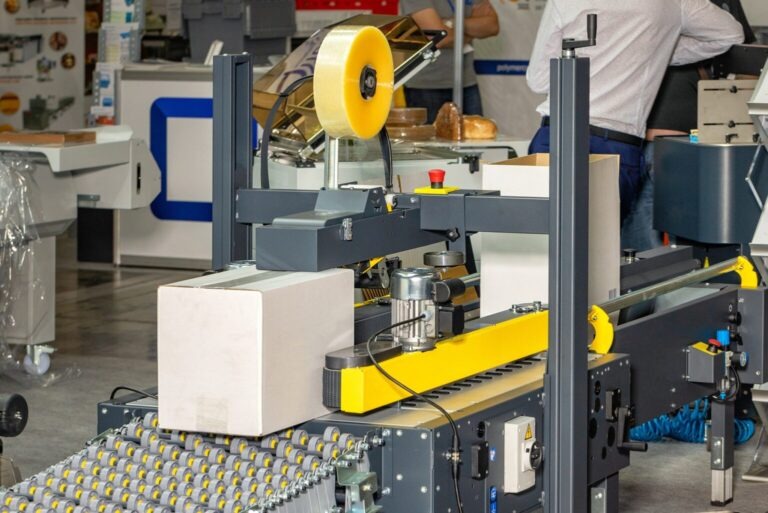
Example of a packaging line in which carton machine folds the boxes and the heat sealer applies the film, demonstrates the practical benefits of SCADA. Before the system was implemented, downtime reached 6 % shifts due to frequent false detections of photo sensors. After integrating sensors, configuring alarm thresholds and implementing OEE reports SCADA systems allow accurately record the number of cycles and automatically schedule film replacement. A reduction in downtime of 3 % translated into a return on investment within eight months, and the maintenance team gained a tool to production optimisation.
Key benefits: from increased productivity to early fault detection
SCADA continuously measures production efficiencycalculates OEE, tracks increase efficiency and forecasts energy consumption. SCADA systems enable early detection of bearing anomalies, analysing vibration and temperature, which directly translates into increase safety people and equipment. Integrated dashboards visualise data flow from raw materials to finished product, supporting process optimisation and reducing downtime, which has a significant impact on the production automation.
SCADA system implementation stages
- Process analysis - identification of critical points.
- Architectural design - choice of platform (e.g. Citect SCADA), redundancy, network segmentation.
- Choice of equipment - PLCs, industrial switches, IoT gateways.
- FAT/SAT integration and testing - tag configuration, interference simulation.
- Staff training - operators and maintenance services.
- Commissioning and optimisation - gradual expansion of monitored sites.
Thanks to this methodology implementation of the SCADA system minimises the risk of disruption to the production line.
Data - the fuel of the digital factory
Modern SCADA systems combine control with machine learning. ML models, using data archivingThe SCADA system can be used to predict failures and suggest preventive actions. Integration with an MES or ERP system makes SCADA an integral part of the overall system. part of a larger SCADA system - a coherent platform covering the full value chain.
HMI design: ergonomics and user safety
The first line of contact between man and the control system is HMI. The principle of 'key alarms', graphic minimalism and a uniform colour palette reduce operator response times by up to 18 %. SCADA systems allow implement a hierarchy of screens - from general synoptics to device details - and display step-by-step instructions, reducing human error.

Security in the age of Industry 4.0
Growing OT/IT connectivity is increasing the attack surface. Network segmentation, protocol encryption, application whitelisting and IEC 62443 compliance are building process safety. This approach provides operational certainty even when remote control of equipment and service access from the outside.
SCADA system applications in various industries

- Energy sector - monitoring of wind farms, MV grids and EV chargers.
- Water and waste water - remote control pumping stations, analysis of quality parameters.
- Discrete production - electronics assembly lines, cartoners and others specific machines high volume.
- Chemical industry - reaction plants, ESD systems constituting control system integrated into the DCS.
- Food industry - fermentation, bottling and packaging lines in accordance with HACCP.
In all these areas SCADA systems allow on increasing productivity and rapid response to changing demand, supporting the optimisation of production i increase safety work.
Communication and integration standards
There is no 'one size fits all' solution - Miscellaneous SCADA OPC UA, DNP3, Bacnet/IP or IEC 61850 protocols are supported. The key is the possibility of automating the engineering process: central symbol libraries, automatic generation of tags and scripts minimise the workload for large green-field investments.
Environmental footprint and ESG reporting
The CSRD requires the reporting of energy consumption and CO₂ emissions. SCADA systems enable Automatic export of power, steam and water consumption data to ESG platforms. Managers can assess the impact of recipe changes on the carbon footprint of each batch and shift energy-intensive operations to cheaper night-time tariffs, achieving measurable savings.
Trends: SCADA in the cloud, at the edge and in the engineering metaverse
Migrating servers to the cloud reduces CAPEX costs and provides global access to up-to-date data. Edge computing filters data closer to the source, reducing response times. 3D digital twins and data visualisation in VR make it possible to simulate 'what-if' scenarios, a modern SCADA systems increasingly connect to ESG platforms, financial reports and AI-/ML-as-a-Service modules.
The most common challenges and how to avoid them
- Exaggeration of alarms - standardise thresholds and introduce the principle of first-out alarm.
- No OT/IT strategy - integration with other systems (MES, LIMS, WMS) requires uniform tags and APIs.
- Underestimation of network requirements - IoT increases traffic; plan for QoS and redundant links.
- Gaps in training - staff must understand the principles of supervisory control, data and backups.
Summary
SCADA is not only computer system - is the plant's 'nervous system', enabling remote control of equipment, data acquisition and analysis in real time. Whether you manage a line cartoners, a juice bottling plant or a photovoltaic installation, well-designed SCADA brings tangible benefits: increasing productivity, a reduction in costs and a higher level of security.
FAQ - Questions and answers
What components does a typical SCADA system consist of?
At the core is a redundant server with SCADA software, to which are connected PLC or RTU controllers, a communication network (Ethernet, Wi-Fi, LTE), operator stations with HMI and a database archiving measurements. In larger installations, analytical applications and off-site backups are added.
What is a SCADA system used for in manufacturing plants?
SCADA is used to monitor and remote control industrial processes, collects real-time data, detects failures early and generates reports, resulting in higher productivity and safety.
What steps should be taken to safely implement a SCADA system?
Conduct an OT risk analysis, plan network segmentation, implement password and backup policies, test the configuration in a simulation environment and then train staff on incident response.




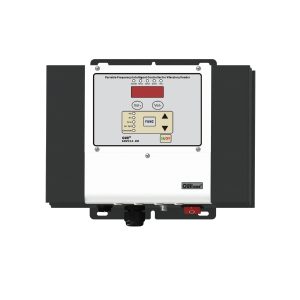 SDVC34-UR controller with automatic adjustment
  English (UK)
  Polski
  Deutsch