

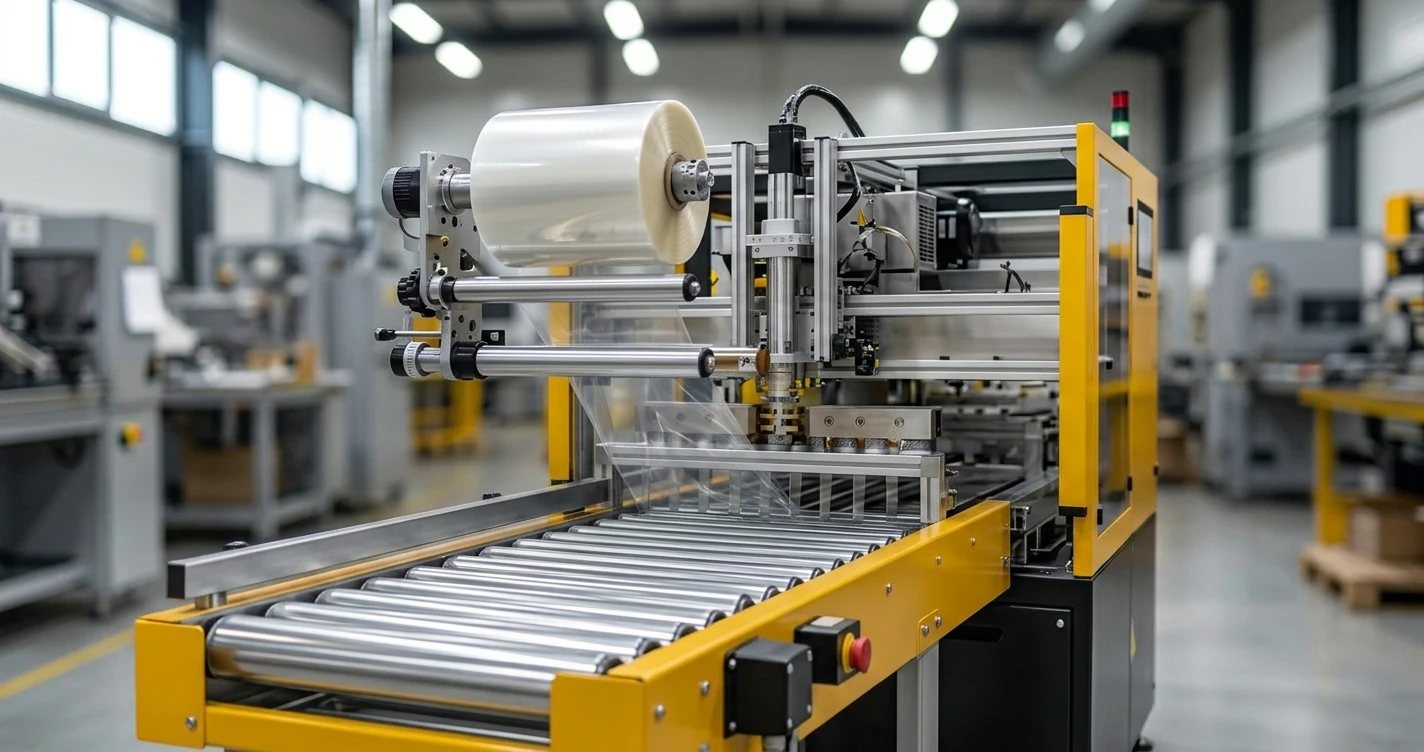
How do I choose a flow-pack machine to match my production profile? Expert guide for SMEs
Key findings
The answer to the question of how to select a flow-pack machine to suit the production profile comes down to precisely matching the technical parameters of the machine to the specifics of the product range being packaged and the efficiency requirements of the plant. Industry data shows that companies automating their packaging processes experience an average 35% increase in operational efficiency in the first year. The following guide looks in detail at the selection criteria, costs and technological aspects of modern packaging systems.
- An analysis of line performance and product dimensions is the basis for selecting the appropriate sealing mechanics (rotary jaws for high speeds vs. box motion for tall products and sealed packages).
- When considering what to look for when choosing a flow-pack machine, priority should be given to integrating the machine with the company's ERP system, thus eliminating bottlenecks.
- When pricing the investment, it is crucial to take into account the total cost of ownership (TCO), the guarantee of access to local 24-hour service and the full compliance of the equipment with the European Machinery Directive 2006/42/EC.
Introduction
Choosing the right packaging technology requires synchronising the mechanics of the machine with the specifics of the product and the plant management system. According to a report by McKinsey Poland on the potential of robotisation, FMCG plants lose up to 18% of productivity annually by mismatching equipment parameters with production scalability. This guide explains step-by-step how to select a flow-pack machine for your production profile to minimise raw material losses and optimise operating costs.
Scaling up production in the food or cosmetics industry inevitably involves the need for automation. The main advantages of flow-pack automation are not only the dramatic speeding up of the process, but also reproducibility and hygiene, which are crucial from the point of view of sanitary standards. Unfortunately, inadequate equipment matching - for example, using too slow sealing jaws for a high throughput line - leads to costly downtime.
By implementing modern Flow pack machines, companies in the SME sector can compete effectively with the market giants. It is worth remembering that professional Packaging of goods is a multi-step process in which the packaging machine must work seamlessly with feeders, weight control systems and labellers.
Principles of transparency in publication
This article is based on objective technical standards, EU directives and many years of empirical data collected by TARPAK brand engineers. Our aim is to substantively educate the market and support managers in making informed investment decisions. We believe that transparent presentation of the advantages and disadvantages of individual technologies allows investors to reliably assess the solutions available on the market, even when considering offers from competing manufacturers.
Packaging mechanics: How does a horizontal flow-pack packaging machine work?
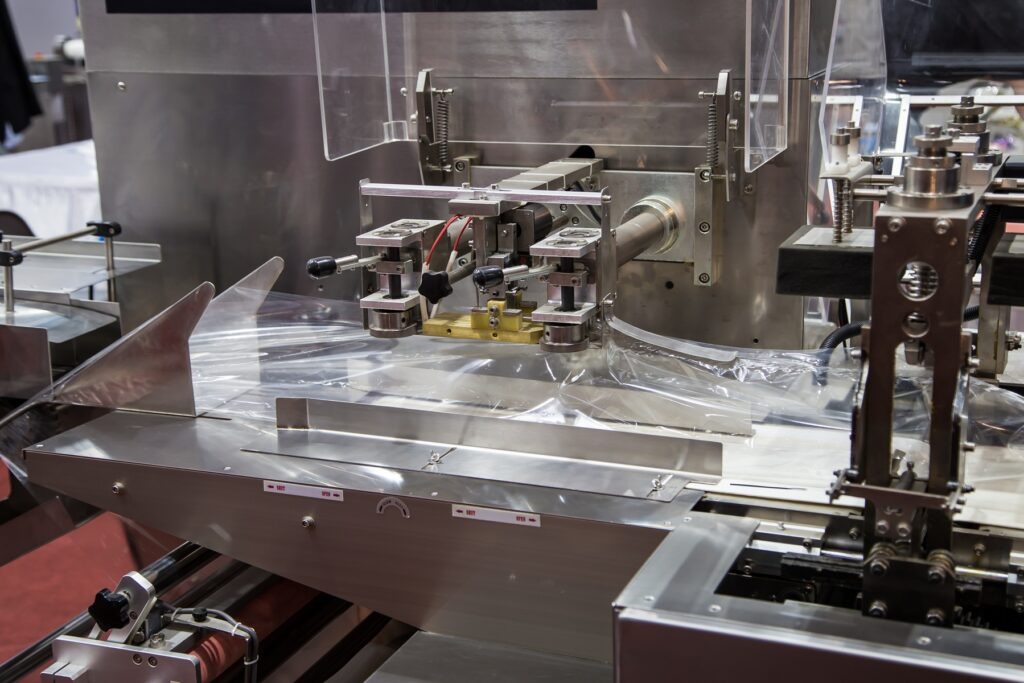
The horizontal packaging machine forms the flat film into a tight sleeve around the moving product, then seals and cuts it off. Our performance tests show that the precise synchronisation of the servo drives allows speeds of up to 300 packs per minute. Understanding these mechanics makes it easier to optimise the entire packaging line.
When considering how a horizontal flow-pack packaging machine works, it is important to analyse its four main working stages. The first is the feeding of the product. The product arrives on the infeed conveyor (usually a chain conveyor with pickers or a belt conveyor), which positions it with great accuracy in relation to the forming station. Precision at this stage determines the quality of the final package and prevents the product from jamming in the jaws.
The second stage is the forming of the film sleeve. A flat strip of film, unwound from the reel by a tensioning system, passes through a so-called forming box (tunnel). It is here that the film wraps around the product, forming a longitudinal tunnel. It is worth noting at this point which films are used in flow-pack machines. The most common are polypropylene films (BOPP), multilayer laminates with an EVOH barrier, and increasingly also innovative mono-material and paper-coated films, which respond to increasing ecological requirements.
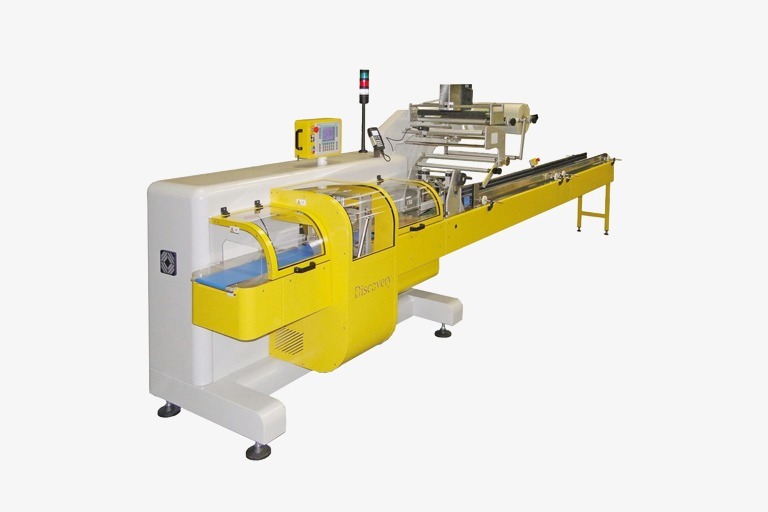
The third and fourth stages take place almost simultaneously: longitudinal sealing and transverse sealing together with the cut-off. The lower sealing rollers join the edges of the film underneath the product to form a tight longitudinal seam. The product then enters the transverse jaw station, which seals the front and back of the pack, while cutting the finished pouch from the rest of the sleeve. The key components responsible for trouble-free operation at this stage are precise temperature controllers and independent servo drives, which compensate for any fluctuations in film tension.
Rotary jaws or box motion? Types of flow-pack machines and their applications
The type of sealing system determines both the maximum packaging speed and the tightness of the finished pack. According to data from the Polish Chamber of Packaging, more than 65% food plants choose rotary systems for standard products, while box motion technology dominates for modified atmosphere packaging (MAP). Choosing the right head kinematics is the most important technical decision.
When analysing what types of flow-pack machines there are and their applications, we divide them primarily according to the movement of the sealing jaws. The most popular are rotary jaws (rotary). In this system, the sealing heads rotate around their own axis, coming into contact with the film for only a fraction of a second at cut-off. This has the advantage of great efficiency - machines of this type are ideal for packaging biscuits, candy bars, soaps or small plastic items, where throughput is the priority rather than hermetic gas tightness.
A completely different system works box motion (walking jaws). In this technology, the sealing head moves along the packaging line, accompanying the product for a long moment before returning to its initial position. This mechanism significantly increases the sealing time (so-called dwell time). This is absolutely crucial when using thick laminates, barrier films and modified atmosphere packaging (MAP), where 100% airtightness is required. The box motion system also allows the packaging of very tall or heavy products that could be damaged by the rapid rotation of the rotary jaws.
Investors often also ask what the difference is between a horizontal and a vertical form fill seal (VFFS). The difference lies in the direction of product movement. Horizontal machines (flow-pack) transport the product flat, which is ideal for goods with a fixed shape (e.g. meat trays, chocolates, bread). Vertical packers, on the other hand, form the sleeve from top to bottom and the product falls into it by gravity - this solution is dedicated exclusively to free-flowing products (groats, sugar), granulates, liquids or frozen foods.
Productivity vs. packaging: How to match the speed of the packaging machine to the scale of production?
Adjusting the capacity of the packaging machine requires OEE analysis and identify bottlenecks across the production line. Our experience in implementations has shown that oversizing a machine by 50% relative to real needs generates unjustified costs of tens of thousands of zlotys with no real return. The optimum capacity reserve should be between 15% and 20%.
In order to properly answer the question of how to select the capacity of a flow-pack packaging machine for the scale of production, it is necessary to look at the process more broadly than just through the prism of the manufacturer's declared „maximum speed”. The speed of the machine must be synchronised with the real throughput of upstream equipment (e.g. ovens, slicers) and downstream equipment (e.g. cartoners). A packaging machine that is too fast and does not receive the right amount of product will run in a continuous micro-stop mode, which drastically reduces its service life and increases its energy consumption.
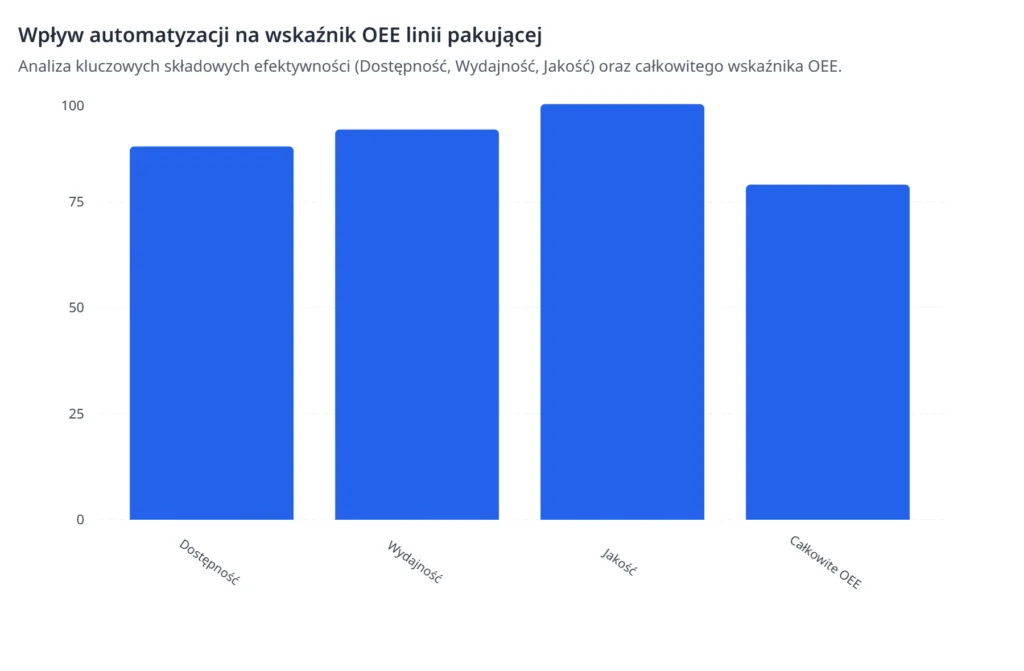
A key aspect when packaging a diverse range is machine flexibility and changeover time. In modern SME plants, it is rare to produce one format for an entire month. Changing the forming tube, adjusting the width of the guides and changing the sealing parameters should be done without tools and take no longer than 10-15 minutes. Modern control systems allow dozens of „recipes” to be stored in the machine's memory, enabling the operator to automatically adjust the servo drives after selecting the appropriate programme on the touchscreen.
For large-scale plants, we recommend machines with automatic feeding systems (so-called film auto-splicing and intelligent buffers), which eliminate the need to stop the line when changing film rolls. Avoiding bottlenecks is the basis for profitable production.
Product specificity: Physical characteristics vs. choice of machine and film
The physical and chemical properties of the product define the material requirements of the machine and the type of barrier film used. According to National Sanitary Inspection standards, equipment that comes into direct contact with foodstuffs must meet stringent sealing classes (minimum IP65). Omission of this aspect at the specification stage is the most common cause of problems during quality audits.
When analysing whether a flow-pack machine is suitable for food packaging, the answer is definitely yes, provided the design is suitable. In the meat, dairy or fruit and vegetable industry, the machine must be made entirely of acid-resistant steel (AISI 304 or AISI 316). The design should be of the so-called „balcony” design (cantilever design), which means that the drives and electronics are completely separated from the product flow zone. This allows the machine to be aggressively cleaned under pressure with active foam without the risk of damaging components.
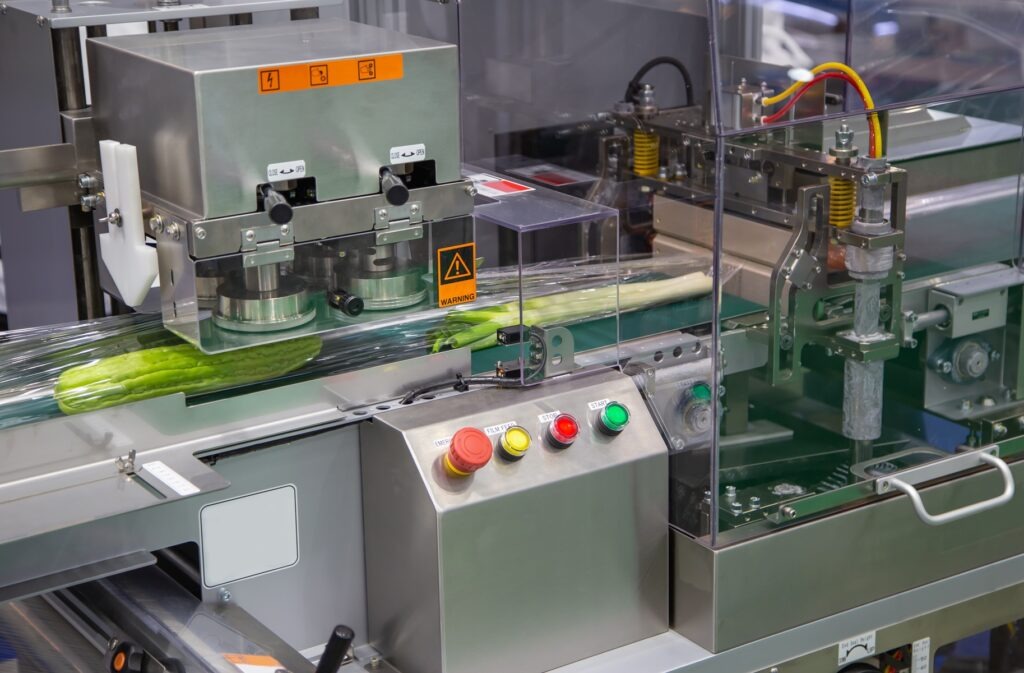
When considering what to look for when choosing a flow-pack machine, the selection of consumables cannot be overlooked. Suitable types of packaging determine the configuration of the heating system. Traditional polypropylene films require standard heating jaws. However, if the product requires an extended shelf life and the use of barrier films (e.g. with an EVOH layer), the machine must be equipped with precision PID temperature controllers and inert gas injection systems (nitrogen/carbon dioxide). Increasingly, shrink flow-pack films are also being used, which, after sealing, pass through a shrink tunnel to fit perfectly into irregular shapes (e.g. heads of cabbage or cheese).
What distributors won't say: ERP integration, law and downtime costs
Lack of integration of the new machine with the plant ERP system and reliance on foreign service are the most expensive pitfalls in the automation process. According to a study by the Gdansk University of Technology on maintenance, an hour of unplanned downtime of the main packaging line in a medium-sized FMCG plant costs between PLN 4 000 and PLN 12 000. Investment in local technical support is the foundation of operational security.
One of the biggest advantages of a direct manufacturer (such as TARPAK) over companies distributing Asian or Southern European machines, is the possibility of deep intervention in the control software (PLC). In today's reality of Industry 4.0, a packaging machine cannot be an isolated „island”. It must communicate with the ERP system (e.g. SAP, Comarch) in real time. Integration allows the automatic downloading of production orders, reporting of film consumption, counting of rejects and monitoring of the OEE indicator directly on the desks of operations managers. The most common mistake we see investors make is to purchase a „closed” machine from an intermediary, the subsequent integration of which with SCADA systems proves technically impossible or absurdly expensive.
Another key aspect is safety and legal compliance. Every machine put into service in the European Union must comply with the stringent requirements of the Machinery Directive 2006/42/EC. DTR documentation, CE declaration of conformity and appropriate safety features (light curtains, emergency stop switches, polycarbonate guards with locking mechanism) are the bare minimum. Cheap imported equipment often has certificates that are questionable to the Polish National Labour Inspectorate, which in the event of an accident on the line results in powerful penal consequences for the company's management.
It is also worth answering honestly how much it costs to service and maintain an industrial packaging line. So what if the distributor's machine was 15% cheaper to buy, if you have to wait 3 weeks from abroad for a specific servo controller or custom heater? As a local manufacturer, we guarantee a service response within 24 hours and constant stock availability of key spare parts. What's more, the modular design of our machines allows us to use standard components from renowned brands (e.g. Siemens, Festo, Omron), which the local maintenance department can purchase from nationwide automation wholesalers in an emergency.
Innovation budget: How much does a professional flow-pack machine cost?
The total cost of implementing an industrial flow-pack machine ranges from PLN 120,000 to as much as PLN 450,000, depending on the degree of automation and sanitary requirements. Our financial analyses for the SME sector show that with two-shift operation, the return on investment (ROI) occurs within 14 to 18 months on average. This is one of the most profitable areas to automate in a plant.
When considering in detail how much a professional flow-pack machine costs, it is important to break this amount down. The simplest machine with rotary jaws, stepper control and manual product feeding can be purchased at the lower end of this range. However, if you add a full servo motor drive (3 to 5 servo axes), a box motion sealing system for modified atmosphere (MAP), an IP65 stainless steel hygienic design and automatic buffering stations with delta robots - the price naturally rises.
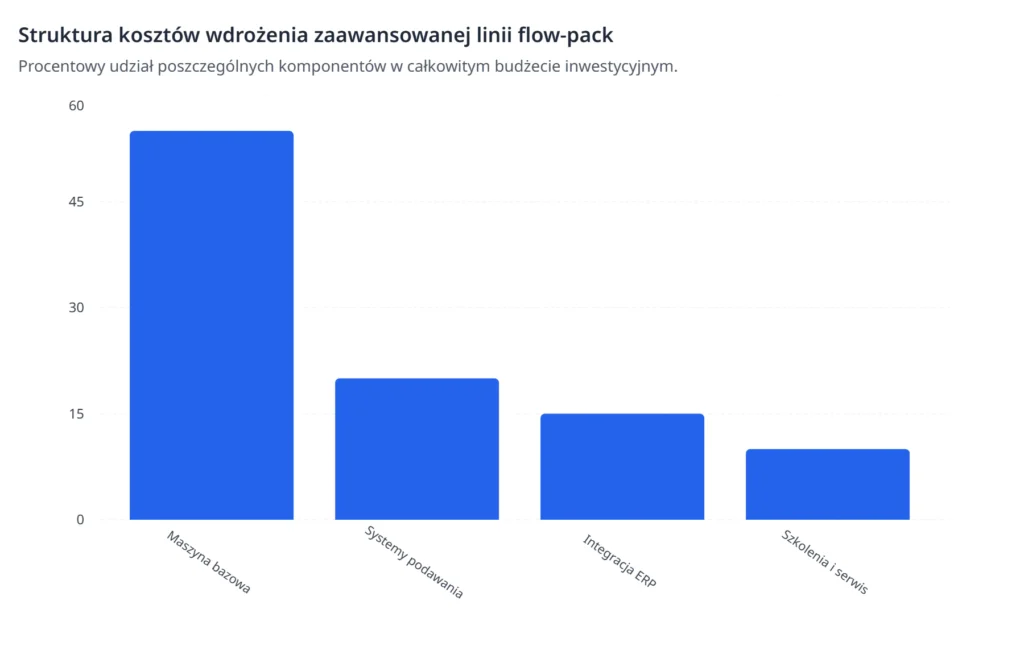
Many entrepreneurs ask themselves whether packaging automation pays off for SME companies. The answer is clear. Replacing the work of 3-4 shift operators (who manually pack and label goods) with one efficient machine operated by one person generates immediate savings of tens of thousands of PLN per month in staff costs alone. In addition, precision film unwinding systems reduce material losses by approximately 8-12%. It is also worth bearing in mind the financial instruments available, such as industrial leasing or EU grants for innovation and digitisation, which significantly lower the threshold for entry into advanced technologies.
Frequently asked questions (FAQ) about flow-pack systems
Understanding packaging technology requires sorting out basic definitions and industry terms. Based on queries to our design department, we have compiled the key information into concise answers. FAQs are the quickest way to verify design assumptions before contacting an engineer.
What is a Flow Pack?
Flow pack is a horizontal packaging technology that involves forming a flat strip of film into a sleeve around the product and then sealing and cutting it off on both sides. This creates the characteristic „pillow bag” packaging with one longitudinal seal at the bottom and two transverse seals at the ends.
What are the advantages of automatic flow-pack machines?
The main advantages are the very high throughput (up to several hundred pieces per minute), the reduction in human labour costs and the excellent repeatability and aesthetics of the packaging. In addition, these systems provide the hygiene and barrier properties necessary to extend the shelf life of food products, minimising the risk of contamination.
How to choose the right cartoner for the production profile of a small plant?
The cartoner must be synchronised with the ejection speed of the flow-pack machine. In small plants, compact intermittent motion cartoners are best suited, offering great flexibility in changing box formats without the need for costly mechanical changeovers.
Which labelling systems work best in the food industry?
The food industry is dominated by print&apply systems integrated directly into the flow-pack machine. These allow the dynamic printing of expiry dates, batch numbers or 2D codes (e.g. QR, DataMatrix) directly onto the film just before the sleeve is formed, eliminating the need for external labellers at the end of the line.
Limitations of flow-pack technology and alternatives
Although flow-pack machines are extremely versatile, they do not work in every production situation. Our implementation analyses show that trying to forcefully adapt this technology to unsuitable products generates up to 25% more quality rejections. Awareness of these limitations protects against wrong investment decisions.
When is a horizontal flow-pack machine not the best choice? Primarily when packing liquids, sauces or highly dusty products (flour, fine spices). In these situations, gravity is the enemy of horizontal conveying and vertical machines (VFFS) or specialised doypack dispensers remain the only valid choice.
Another limitation is the need for very rigid, hard protective packaging. If the product (e.g. sterile medical instruments or sharp metal components) requires a rigid tray with deep embossing, flow-pack technology gives way to thermoforming machines (rollstock) or traysealers. It is also worth noting that the flow-pack machine rarely functions on its own. In mature plants, it forms the heart of the line, which must be encapsulated by complementary equipment such as metal detectors, dynamic scales (checkweighers) and the aforementioned automatic cartoners that collect the finished pouches into master packs.
Summary: Start designing your packaging line
Choosing the right packaging machine is a strategic decision that affects the profitability of the entire plant for years to come. Precise alignment of mechanics (rotary jaws vs. box motion), consideration of the specific characteristics of barrier materials and full integration with the company's IT systems are the pillars of successful automation. Investing in technology from a proven, local manufacturer guarantees not only productivity, but above all the security of continuity of operations and prompt service. If you are ready to optimise your production processes, Configure your machine during a free engineering consultation with our team.
Author - engineer at TARPAK Design Office, responsible for the design and implementation of automated packaging lines for the FMCG industry for several years. Based on experience from more than 150 implementations in Poland and the DACH region, our team creates „tailor-made” machines that perfectly fit the specific technological requirements of our customers. Each line we design is fully CE certified and rigorously tested for continuous operation under extreme industrial conditions.
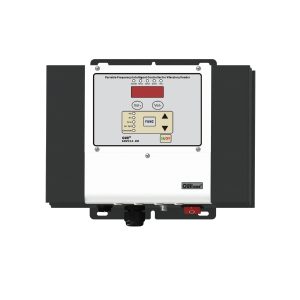 SDVC34-UR controller with automatic adjustment
  English (UK)
  Polski
  Deutsch